
Why a Supplier Network Must Be Designed, Not Accumulated
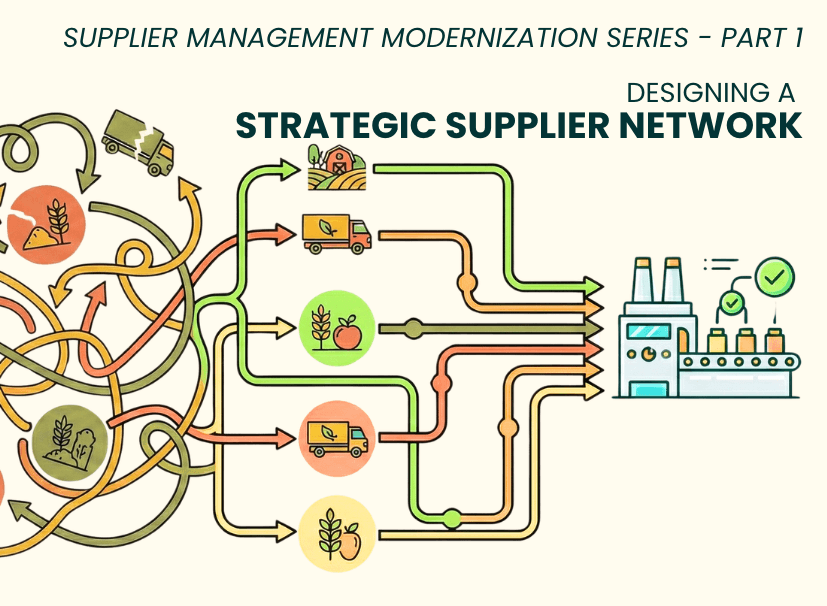
It’s become an overwhelmingly obvious reality that many organizations have resorted to “collecting” suppliers over time rather than deliberately designing a supplier network. The recent demands of both the market and regulatory bodies have put significant pressure on supplier networks and their management, making the strategic engineering of supplier programs more necessary than ever.
The truth is that collecting, instead of engineering, a supplier network leaves an organization open to constant and irregular business interruptions- from geographical clusters that localize and increase risk to directionless administrative efforts, leaving an organization exposed and overburdened for minimal return on effort.
A supplier network built without intention is chaotic and can burden any team, regardless of talent. A modern supplier network must be engineered with intent, not built on reactivity.
The Risks of Adding Suppliers Without a Strategy
While collecting, organizations find themselves scrambling to address the consequences of operating reactively rather than doing the work of managing an intentional supplier program. Typical consequences of these unstructured supplier expansions include:
Capacity blind spots during peak weeks,
Hidden geographic concentration,
Greater administrative load and diluted spending,
Seasonal shortages and uncontrolled buying, and
Increased risk exposure across climate, logistics, and compliance.
With reactive supplier programs, the only consistency is the irregular interruptions to business that inhibit the organization’s capacity for growth and operational sustainability. Teams are left to respond to instances of crisis, instead of navigating planned directives.
Where to Start: Demand, Capacity & Geography
Supplier program building demands an understanding of the business’s needs of today and tomorrow, a possibly overwhelming reality to consider. Starting plainly can help to focus attention and direct intentions in decision-making.
To begin, consider the following,
Demand by region, customer, and season
Supplier capacity, baseline, and scalability.
The geographic distribution network needed for resilience.
Strategically overlaying these three critical considerations reveals where to expand, reduce, and rebalance. Providing your team with a map of intention as a reference encourages productive and effective program development and monitoring.
Special Considerations for Supply Chain Demands
The current increased demands made by both the market and regulatory bodies, and the consequence of these demands on the supply chain, demand that organizations begin to make additional considerations for the sake of geographic and seasonal supplier optimization. Going beyond price, food safety, quality, and seasonality, best practices must now include a critical evaluation of:
Scalability and surge capacity,
Regional climate, geopolitical, and infrastructure risk,
Logistics lead times and cost-to-serve,
Sustainability and ESG, and,
Technology integration and data visibility.
These factors can help to determine which regions should serve as primary vs secondary sources, while also indicating where alternates may be needed.
The Significance of Planning
Now that program intentions and special considerations have been mapped out, a planned approach to supplier onboarding is the next necessary step. Having consistent and referenceable requirements for supplier onboarding is crucial for continued program management. Some tools to construct and consider in your planning include:
A map of demand by SKU × region × season,
A design of the ideal supplier footprint,
An onboarding scorecard,
A referenceable comparison of capacity commitments and demand planning, and
A mechanism for system checks, such as scheduled and periodic program assessments built into project timelines, to maintain and rationalize the supplier network over time.
These considerations turn supplier onboarding into an effective strategic tool rather than an unmanageable paperwork pipeline.
Conclusion
Supplier networks must be engineered with intention, not beholden to moments of circumstance. When capacity, geography, and seasonality guide onboarding, organizations strengthen resilience, maintain food safety and quality, and reduce risk. A strategic supplier base cannot be accidental; it must be actively designed, continually monitored, and aligned with the reality of your organization's operations.
What’s Next
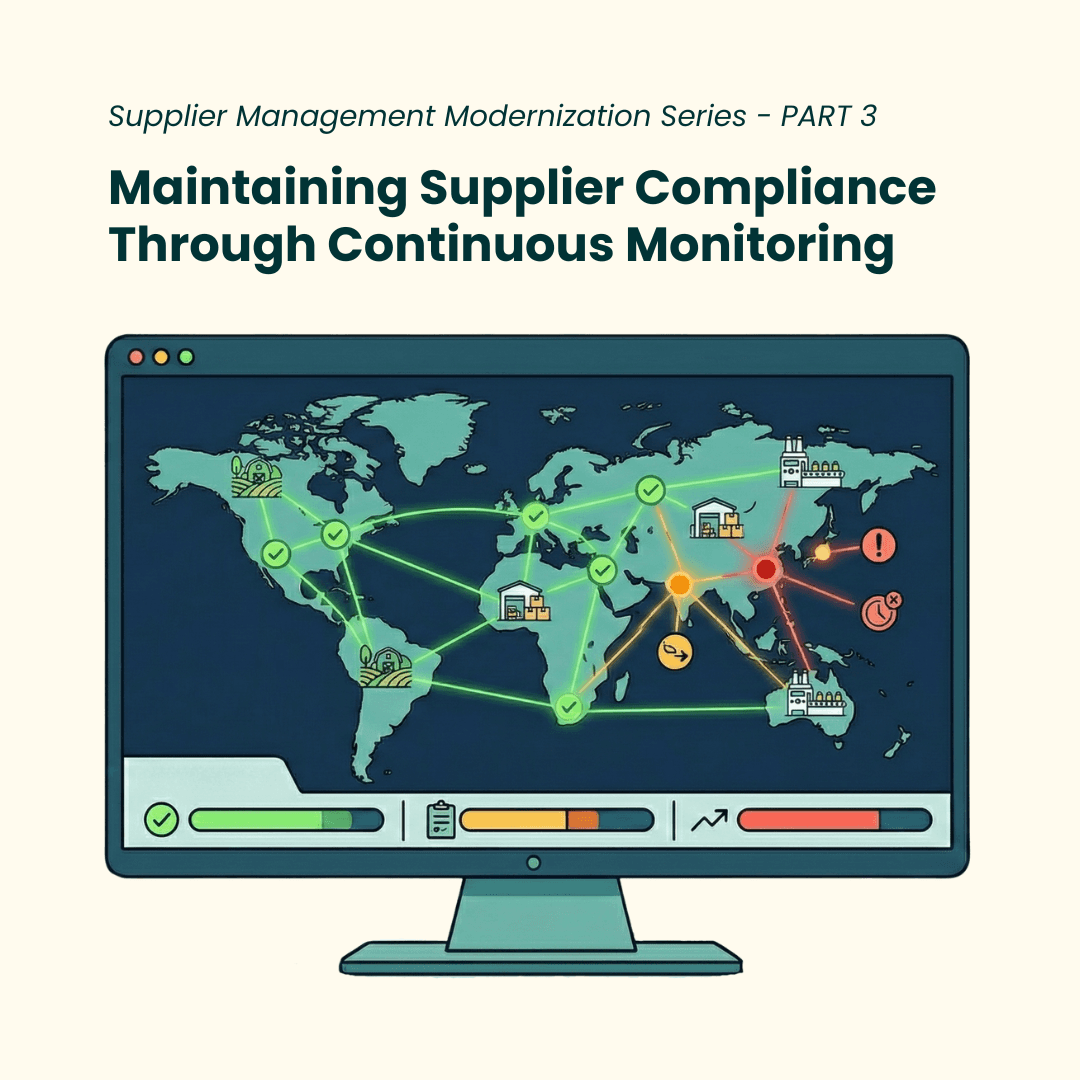
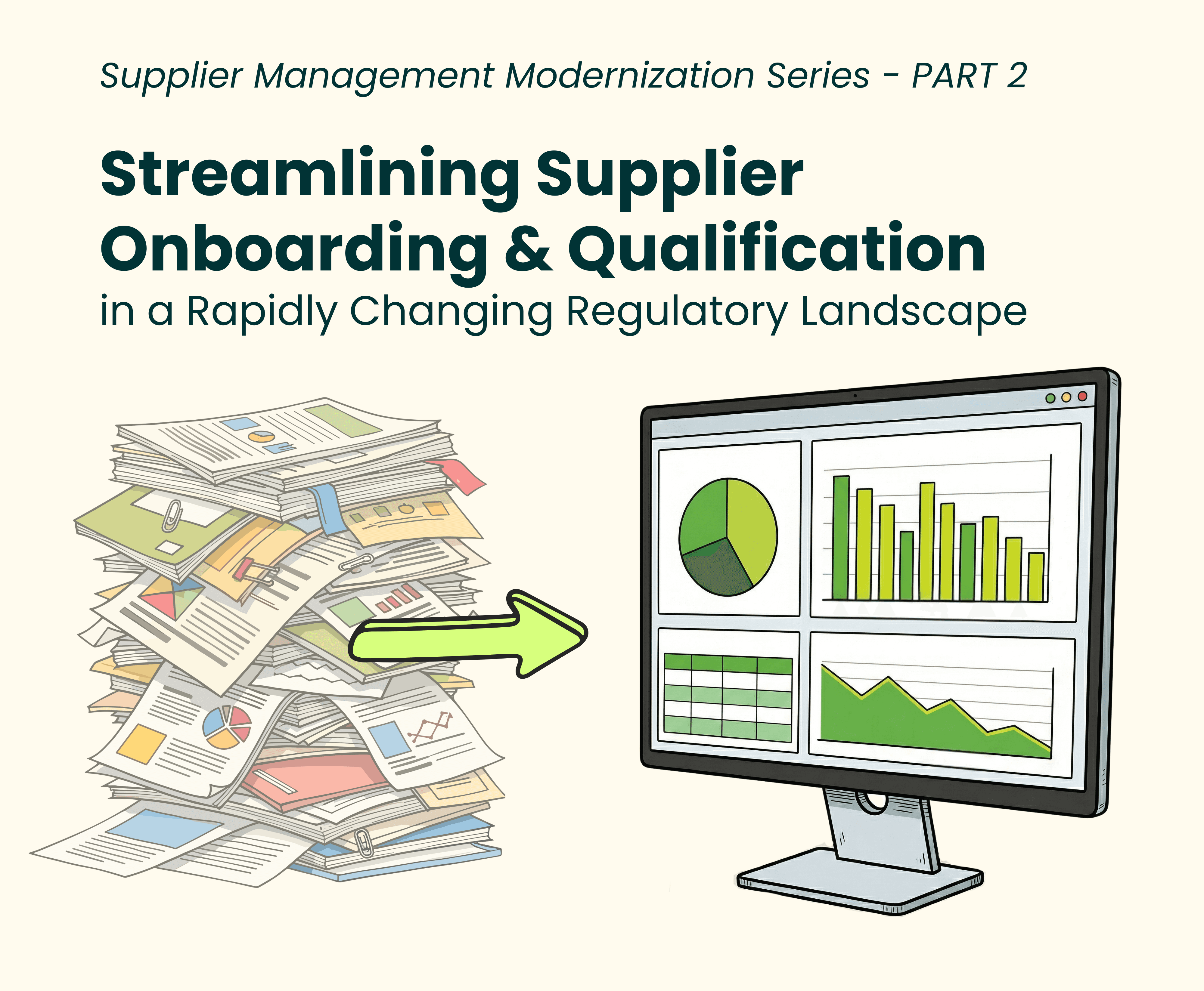
In Part 2 of this series, we’ll move from strategic design to execution, specifically, how organizations can streamline supplier onboarding and qualification in today’s increasingly complex regulatory environment. Then, in Part 3, we’ll explore how continuous monitoring ensures suppliers remain compliant long after onboarding. A resilient supply network is not only designed; it’s maintained through consistent, real-time oversight.